Whoops Something Weird Happened Please Try Again Rabbit
vulture lists
xc Classic Looney Tunes Cartoons Y'all Can Watch Right At present
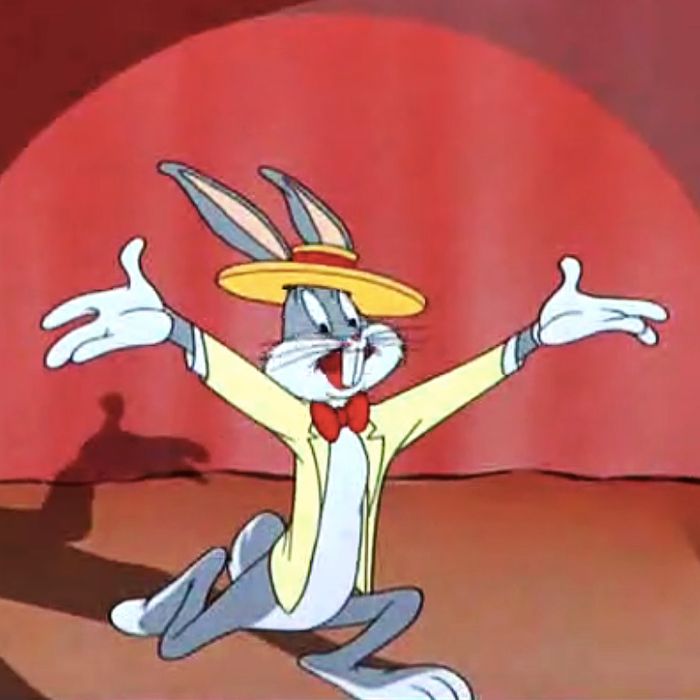
On Apr 17, 1930, the very first Warner Bros. Looney Tunes drawing, "Sinkin' in the Bathtub," was released. From the start, the Looney Tunes and Merrie Melodies blithe shorts were designed as a more iconoclastic alternative to Disney's artistically groundbreaking Silly Symphonies. While Walt Disney was focused on elevating the art of blitheness, Warner Bros.' dream team of writers and directors were hell-bent on just making each other laugh. "They never went for the beautiful stuff at Warners," Warner Bros. writer Michael Maltese recalled in an interview with Joe Adamson that appeared in Moving-picture show Comment. "At that place was but one guy … Chuck [Jones], at the time, had the Disney syndrome: the urge to make the near beautiful cartoons going. [Friz] Freleng would say, 'Ah, bullshit! Allow's knock 'em expressionless.'"
On this 90th anniversary, here is a sampling of xc of the looniest and merriest cartoons in the Warner Bros. catechism, including a top 10 of essential masterworks. Over 1,000 were produced, then I'm bound to have missed a classic or ii. Ain't I a stinker?
(Acknowledgment to the essential tomes: Looney Tunes and Merrie Melodies , by Jerry Brook & Will Friedwald; Of Mice and Magic: A History of American Animated Cartoons , by Leonard Maltin; and Bugs Bunny: Fifty Years and Only One Greyness Hare , past Joe Adamson. Cheers besides to the Gilbert Gottfried'southward Astonishing Jumbo Listener Society Facebook group).
"Sinkin' in the Bathtub" (1930, Hugh Harman, Rudolf Ising)
A tardy jalopy emerging from an outhouse immediately distinguishes Warner Bros.' first Looney Tunes cartoon from its Disney counterparts. The plucky Bosko is perhaps early animation'south least offensive blackness character. He would star in 39 more than cartoons.
"It'due south Got Me Again!" (1932, Ising)
A bunch of Mickey-like rodents' midnight dance is broken upwardly by a cat, who gets it in the cease. The commencement Warner Bros. cartoon to earn an Oscar nomination.
"I Haven't Got a Hat" (1935, I. Freleng)
Porky Pig makes his screen debut stuttering his manner through "The Midnight Ride of Paul Revere" during a course recital, but it'south the forty seconds of adorable pups Ham and Ex performing the championship tune that is everything I love about Warner Bros. cartoons.
"Page Miss Glory" (1936, Tex Avery)
A good cartoon gets great at the i:50 mark as a Hicksville hotel bellhop awaiting the arrival of Miss Glory fantasizes his burg is transformed into a cosmopolitan playground in a spectacular "Moderne Art" sequence.
"I Love to Singa" (1936, Avery)
Information technology'southward The Jazz Vocalist in eight minutes. With Owls. Cartman broke into the title tune whenever he was zapped past an conflicting ray in the very start episode of S Park.
"Porky's Romance" (1937, Tashlin)
Diva Petunia Pig breaks Porky'due south center, just a nightmare scenario of his futurity should he marry her prompts a change of attitude.
"She Was an Acrobat'southward Daughter" (1937, Freleng)
This collection of spot gags captures an former-fashioned night at the movies consummate with newsreel, sing-along, and the primary allure, a spoof of The Petrified Forest.
"Porky's Duck Hunt" (1937, Avery)
Daffy Duck makes a big splash in his debut. "Hey, that wasn't in the script," complains Porky to the duck that's been bedeviling him for most of the cartoon. "Don't let it worry you, Skipper," he whoops. "I'm just a crazy, darn fool duck."
"Porky's Railroad" (1937, Tashlin)
Information technology'due south the 30th Century Limited versus "Toots," the little engine that barely could. Dramatic angles and odd perspectives continue this one chugging along.
"Speaking of the Atmospheric condition" (1937, Tashlin)
Drugstore magazines come to life afterward-hours with literal characterizations of their titles. Thus, a miscreant is sentenced to Life but escapes through Liberty with other mag figures in hot pursuit.
"The Case of the Stuttering Pig" (1937, Tashlin)
Warner Bros. played up the fact that its cartoons were going to exist screened in picture show theaters. In this pigs-in-peril thriller, Porky, Petunia, and Porky'southward brothers try to elude their evil lawyer trying to claim their inheritance. It'southward the guy in the tertiary row of the theater to the rescue.
"Daffy Duck & Egghead" (1938, Avery)
"I'm not crazy. I just don't give a darn," Daffy whoops. Notable for his lively rendition of the Looney Tunes theme song, "The Merry-Go-Round Broke Downward."
"Katnip Kollege" (1938, Cal Howard, Cal Dalton)
Johnny's an outcast until he learns how to swing. James Taylor loved this drawing growing upward and finally recorded its showstopper song, "As Easy As Rolling Off a Log," for his most recent anthology, American Standard.
"Cinderella Meets Fella" (1938, Avery)
All I know about vaudevillian Joe Penner is that his large catchphrase was "Wanna buy a duck?" But he was popular plenty to exist caricatured as Egghead in this and other Warner Bros. cartoons.
"Daffy Duck in Hollywood" (1938, Avery)
Warner Bros. cartoons were meta before meta was a thing. Daffy runs amuck on a movie-studio fix, merely is sure to give his studio a plug. "I've got an choice coming up," he explains.
"Hamateur Night" (1939, Avery)
That'southward Avery'south express joy emanating from the hippo in the audience who constantly breaks up apprentice night at the Warner Bros. theater.
"Daffy Duck and the Dinosaur" (1939, Chuck Jones)
Setting this cartoon in the Stone Age ("for no reason") gave the writers the elbowroom to do something Disney would never dare: actually kill off 1 of its major cartoon stars.
"Thugs With Dingy Mugs" (1939, Avery)
Spot gags pay off in this spoof of Warner Bros. gangster films. Bank robber Killer sounds a lot like "Eddie Robinson," and he can't help showing off his radio star Fred Allen faux to the audience.
" Old Glory " (1939, Jones)
Something new has been added: rotoscoping to bring to life personages and events from American history to inspire Porky to larn the Pledge of Fidelity. Akin to a "Very Special Episode" of Merrie Melodies.
"The Hardship of Miles Standish" (1940, Freleng)
Elmer Fudd stars in a rare heroic part as John Alden in this retelling of the courtship between Priscilla and Miles Standish. Brace yourself for the inevitable Cleveland Indians sight gag.
"You Ought to Be in Pictures" (1940, Freleng)
Daffy goes Eve Harrington on Porky, disarming him to quit cartoons for feature films, thus paving his fashion to A-list condition. An impressive early blend of live action and animation that features a cameo by cartoon producer Leon Schlesinger.
"Tom Thumb in Trouble" (1940, Jones)
Rather than satirize Disney cartoons, Jones emulated them with this by and large played-straight telling of the Grimm brothers fairy tale that includes a dramatic snowstorm rescue and tear-jerking reconciliation.
"Bedtime for Sniffles" (1940, Jones)
Sniffles, maybe the most Disney-esque character in the Warner Bros. stable, desperately tries to stay awake on Christmas Eve to see Santa.
"Joe Glow, the Firefly" (1941, Jones)
Another Jones Disneyesque charmer about a firefly exploring the landscape of a sleeping camper's tent.
"Porky's Preview" (1941, Avery)
Porky is hosting the premiere of his new cartoon that he made himself. It'southward v cents for admission, simply a skunk can't get in because he has merely one "cent." (Get it?)
"Hollywood Steps Out" (1941, Avery)
Once once again, the celebrity caricatures are beside the bespeak. If y'all don't know who Ann "the Oomph Girl" Sheridan, Sally Rand, or Sonja Henie are, in that location are plenty more recognizable gilded-age Hollywood icons on hand. Clark Gable steals every scene he walks through. ("Stick around, folks. This ought to be skilful.")
"Hiawatha's Rabbit Hunt" (1941, Freleng)
After Bugs gets the all-time of the mighty warrior throughout this Oscar-nominated cartoon, Hiawatha gets the terminal laugh. The rabbit-stew scene gets a reprise in "What's Cookin,' Md?"
"Wabbit Twouble" (1941, Bob Clampett)
Elmer Fudd is looking forward to "west and welaxation" (one of his virtually quoted lines) in Jellostone National Park. Thanks to Bugs, it is annihilation but a "westful wetweat."
"The Wabbit Who Came to Supper" (1942, Freleng)
Elmer Fudd inherits $iii million, but he doesn't get ane scarlet cent if he harms any animals — especially rabbits. This is Bugs at his most goading.
"Horton Hatches the Egg" (1942, Clampett)
Faithful to Dr. Seuss's beloved book 100 percentage.
"The Dover Boys at Pimento University or the Rivals of Roquefort Hall" (1942, Jones)
This was the "Like a Rolling Rock" of cartoons: a radical difference that clocked in at an extended nine minutes. And so revered in animation circles is Jones's stylized homage to the American melodrama that, in 2018, xc animators collaborated on a remake: each of their contributions animated in their own styles.
"A Tale of 2 Kitties" (1942, Clampett)
Babbit and Catstello (Abbott and Costello caricatures) go afterward a "poor little eensy-weensy, itsy-bitsy defenseless little bird. They don't know him very well, practise they? Introducing Tweety, whose "I tawt I saw a putty tat" became his instant catchphrase.
"My Favorite Duck" (1942, Jones)
Only as Bugs relentlessly spoiled Elmer's wistful wetweat in "Wabbit Twouble," Daffy takes bully please in foiling Porky Sus scrofa'southward camping ground trip. Simply unlike Bugs, Daffy gets what'south coming to him, which is how that ordinarily goes.
"Pigs in a Polka" (1943, Freleng)
This drawing and Allan Sherman's musical parody "Hungarian Casserole" introduced generations to Brahm'southward "Hungarian Dances," which provides the musical accompaniment to this retelling of "The Three Fiddling Pigs."
"Tortoise Wins by a Hare" (1943, Clampett)
An uncharacteristically bitter and vindictive Bugs challenges the tortoise to a rematch after losing the race dorsum in Avery'south "Tortoise Beats Hare" in 1941. It's rare to see Bugs then drastic and defeated. The end is particularly trigger-happy and nighttime.
"Greetings Bait" (1943, Freleng)
Hither's all you demand to know virtually the mustached worm in this Oscar-nominated cartoon. He is a caricature of comedian Jerry Colonna, who was best known equally a foil for Bob Hope on his radio bear witness and in his films. His catchphrases were "Greetings, Gate" and "Isn't information technology?," as in "Fascinating, isn't it?"
"Wackiki Wabbit" (1943, Jones)
2 castaways find refuge on an island and food in the course of Bugs Bunny, who manages to go on them at bay. This is the i with the enduring image of the ravenous castaways imagining each other every bit a hot dog and hamburger.
"Porky Pig'southward Feat" (1943, Tashlin)
Daffy and Porky together over again, but this time working in tandem to outwit the manager of the Broken Artillery Hotel, who blocks their exit until their bill. A Bugs Bunny cameo represents the showtime time all iii Warner Bros. cartoon stars shared the screen.
"A Corny Concerto" (1943, Clampett)
Gweetings, music lovers. What this glorious Fantasia parody lacks in gravitas or tutu-wearing hippos, it more than makes up for in transgressive gags in the Bugs Bunny segment.
"What's Cookin,' Doctor?" (1944, Clampett)
Bugs Bunny had notwithstanding to be best-selling by the Moving picture University. And then on Oscar night when he loses Best Actor to James Cagney, he declares "sabotage" and demands a recount.
"Swooner Crooner" (1944, Tashlin)
How ya gonna continue 'em down on the farm after they've heard "Frankie"?
"Plane Daffy" (1944, Tashlin)
Tin Daffy Duck resist the charms of voluptuous spy Mata Hari, or will he be coerced into revealing a military machine secret? Turns out "Hitler is a stinker" is no hole-and-corner.
"The Old Grey Hare" (1944, Clampett)
In the yr 2000, former codger Elmer finally gets his rabbit. "I can't believe information technology," coughs Bugs in his dramatic, tear-jerking death scene. But flashbacks to their starting time encounter as babies conceptualize the same-every bit-information technology-ever-was reversal of burial fortunes.
"Stage Door Cartoon" (1944, Freleng)
Elmer chases Bugs Bunny into a vaudeville house, where Bugs tricks Elmer into a series of onstage embarrassments. Mel Blanc debuts his Yosemite Sam voice in the character of a sheriff.
"Odor-able Kitty" (1945, Jones)
A put-upon cat disguises himself as a skunk to avert being kicked around by humans. Enter a skunk with an outrageous French accent whose amorous advances will not exist denied. This would be the only fourth dimension that Pepé Le Pew chased a male true cat.
"The Unruly Hare" (1945, Tashlin)
Bugs Bunny throws railroad surveyor Elmer off-track in one of their funnier outings.
"Life With Feathers" (1945, Freleng)
"Sufferin' succotash! Squab!" Sylvester makes an indelible first impression in his Oscar-nominated debut every bit a dumpster-diving cat who resists a dejected lovebird'southward attempts to get Sylvester to eat him.
"A Gruesome Twosome" (1946, Clampett)
This is Tweety turned up to 11 equally "the naked genius" brings a world of hurting to 2 cats pitted confronting each other by a feline who tells them, "Whoever brings me a piffling bird can exist my fella."
"Baseball Bugs" (1946, Freleng)
It's Bugs Bunny versus the fierce Gas-House Gorillas. When information technology comes to baseball gags, from a literally screaming line drive to the free-swinging Gorillas' conga line around the diamond, this 1 covers all the bases (sorry).
"Hair-Raising Hare" (1946, Jones)
Bugs Bunny is at his wisecracking Groucho Marx best as he outwits an evil scientist's monster. Includes one of his about quoted gambits, and he impersonates a manicurist to distract the creature: "You lot monsters pb such innteresting lives."
"The Swell Piggy Banking concern Robbery" (1946, Clampett)
Daffy Duck gets so excited over the latest "Dick Tracy" comic book that he knocks himself out and dreams he's Duck Twacy. Striking imagery and dramatic angles conjure upwards such fearsome foes equally Jukebox Jaw, Snake Eyes, 88 Teeth, Hammerhead, Pumpkinhead, and more.
"Walky Talky Hawky" (1946, Robert McKimson)
A star is hatched. Foghorn Leghorn makes his Oscar-winning debut as a chicken who uses young chicken hawk Henery Militarist in his feud with the undiscriminating canis familiaris.
"Racketeer Rabbit" (1946, Freleng)
Bugs'south best gangster moving picture finds him holed up in the hideout of Rocky and his henchman, Hugo (caricatures of Edward Thou. Robinson and Peter Lorre). By the fourth dimension Bugs is through with him, Rocky volition be begging for the police to take him.
"The Big Snooze" (1946, Clampett)
Finally fed up with Bugs getting the best of him in all these cartoons, Elmer tears up his Warner Bros. contract. "From at present on, information technology'due south fishin' for me, and no more wabbits." Just Bugs intends to stone his dream boat and get the human action dorsum together.
"Rhapsody Rabbit" (1946, Freleng)
"Franz Liszt? Never heard of him." In an uncharacteristic fleck of role reversal, Bugs Bunny gets upstaged past a mouse loose in his pianoforte.
"Tweetie Pie" (1947, Freleng)
Tweety achieves what Porky, Daffy, or even Bugs Bunny couldn't: win the Academy Honour. This is his first pairing with Sylvester (here chosen Thomas).
"Slick Hare" (1947, Freleng)
In ane of Warner Bros.' very best Hollywood cartoons, Humphrey Bogart wants fried rabbit and gives waiter Elmer Fudd just 20 minutes to bring it.
"Dorsum Aisle Oproar" (1948, Freleng)
Maybe Sylvester's finest seven minutes as his tardily-night caterwauling keeps an exhausted Elmer Fudd awake.
"Rabbit Punch" (1948, Jones)
As in "Baseball Bugs," Bugs'south heckling pits him against a fearsomely large opponent. Things look rocky until Bugs employs a little "stragedy" in a series of knockout (y'all saw that ane coming) gags.
"Bugs Bunny Rides Again" (1948, Freleng)
Yosemite Sam was introduced in "Hare Trigger" in 1945 every bit "the meanest, toughest, rip-roarin'-est, Edward Everett Horton–est hombre that ever packed a six-shooter." And that pretty much sums him up: All he'due south ever going to be is hateful. In his sophomore appearance, Bugs will have to make like Gary Cooper to run him out of town.
"Haredevil Hare" (1948, Jones)
Anticipating the 1950s sci-fi blast, Jones introduces one of the WB universe's nigh popular supporting characters, Marvin the Martian (a.k.a. Commander X-2), who is all fix to accident up Earth.
"Scaredy Cat" (1948, Jones)
Then deep was the Warners demote that its cartoon characters could be paired in fun ways. This was the first of three cartoons to team Sylvester, "a yellow dog of a cowardly true cat," and Porky, his unwitting master oblivious to the perils and — thanks to Sylvester — narrow escapes from death.
"High Diving Hare" (1949, Freleng)
I'm a sucker for obscure popular-culture references. When Yosemite Sam encounters a door atop a high diving platform, he pounds "Open upward that door" so turns to the audience and adds, "Ya detect I didn't say 'Richard?'" Google it.
"Long-Haired Hare" (1949, Jones)
"Of form yous realize this ways war" when opera vocalizer Giovanni Jones breaks Bugs's banjo, harp, and tuba. Bugs literally brings the house downward every bit he sabotages Jones's operation.
"For Scent-imental Reasons" (1949, Jones)
Hither is the essence of the indefatigable Pepé Le Pew. When the feline object of his passions locks herself in a perfume store'southward glass case to escape him, he dejectedly produces a gun and threatens suicide. When she hears an off-screen shot and runs to him, he grabs her in his arms. "I missed," he coos, "fortunately for you lot." For this, he earned his well-deserved Oscar.
"Rabbit Hood" (1949, Jones)
"Don't y'all worry. Never fright. Robin Hood will presently be here." But not before Bugs Bunny gets the best of the Sheriff of Nottingham after poaching the Male monarch's carrots. Errol Flynn himself makes a last-second cameo courtesy of The Adventures of Robin Hood.
"The Ruby Pumpernickel" (1950, Jones)
"Funny, that never happened to Errol Flynn." Daffy, drastic for a dramatic function, pitches Warner Bros. studio head "J.Fifty." on his adaptation of Dumas's swashbuckling chance. Elmer Fudd, Sylvester, and Porky plow up in supporting roles.
"What'southward Up, Doc?" (1950, McKimson)
Bugs shares his life story to the Disassociated Press about his showbiz rise from member of the chorus to vaudeville star Elmer Fudd'southward scene-stealing partner. The "chorus" number looms well-nigh every bit large in the Bugs Bunny canon as "Overture, Curtain, Lights" from The Bugs Bunny Show.
"Operation: Rabbit" (1952, Jones)
Far from the hapless pursuer of roadrunners in "Fast and Furry-ous," this incarnation of Wile E. Coyote is an erudite predator who intends to eat Bugs. "Now don't try to get abroad," he cautions. "I am more muscular, more than cunning, faster, and larger than you are, and I'one thousand a genius." He don't know Bugs very well, practice he?
"Much Ado About Nutting" (1953, Jones)
The characterwork and the comic timing are exquisite as an adorable squirrel tries in vain to crack a globe-size nut.
"Bully for Bugs" (1953, Jones)
Having failed to have "that left turn at Albuquerque," Bugs finds himself in a bullring from which he is unceremoniously ejected past a balderdash'due south headbutt. Another annunciation of war. The balderdash's reactions to Bugs's various and increasingly elaborate paybacks are priceless.
"Devil May Hare" (1954, McKimson)
As far equally nemeses get, the Tasmanian Devil isn't much of a worthy foil for Bugs, but in his debut cartoon, he does brand a whirling, snarling, and raging first impression as a "strong, moiderous beast … with a ravenous ambition."
"Bewitched Bunny" (1954, Jones)
The cackling Witch Hazel (an uncredited June Foray) turns her attention from Hansel and Gretel to making rabbit stew. Bugs's last line after she has been transformed into a voluptuous bunny ("I know, but aren't they all witches within?") hasn't aged well.
"Speedy Gonzales" (1955, Freleng)
"The fastest mouse in all United mexican states" makes his official Oscar-winning debut. With his yellow sombrero and exaggerated Mexican accent, nosotros may be entering Apu territory here. Proceed at your own sensitivity.
"Ali Baba Bunny" (1957, Jones)
Billed equally a Bugs Bunny drawing, but Daffy Duck steals the evidence when an Arabian treasure trove enflames his most acquisitive instincts. "Mine, mine, mine," he proclaims. "I'k rich! I'm wealthy! I'm comfortably well off! This is the one with "Hassan chop."
"Birds Bearding" (1957, Freleng)
Tweety'southward second Oscar-winning outing finds Sylvester joining a support grouping to kick his Tweety-bird habit. But "once a bad ol' putty tat, always a bad ol' putty tat."
"Testify Biz Bugs" (1957, Freleng)
The essence of the Bugs-Daffy relationship, equally Daffy revolts at being billed 2d to Bugs. These are the acts of an increasingly desperate duck.
"Robin Hood Daffy" (1958, Jones)
Ane of the best cartoons in which Daffy undermines his own attempts to be a dashing hero, and i of Porky Pig'southward funniest as he heckles all of Daffy'southward ill-fated attempts to convince him he is indeed Robin Hood.
"Knighty Knight Bugs" (1958, Freleng)
Court jester Bugs is dispatched to defeat the Black Knight (Yosemite Sam) and reclaim the Singing Sword. This earned Bugs Bunny his alone Oscar, which is kind of like Al Pacino getting his statue for Scent of a Adult female.
"High Notation" (1960, Jones)
This Oscar-winning cartoon charts a sobriety-challenged canvass-music musical note'south efforts to get through a operation of "The Blue Danube." Jones gets more personality out of his blithe musical notes than many directors do with their man casts.
10. "Porky in Wackyland" (1938, Clampett)
"It can happen here," and does, as Porky pursues the endangered Practise-Do Bird to Wackyland (population: 100 basics and a squirrel). Truly the ultimate trip, and ane of 4 Warner Bros. cartoons inducted into the National Flick Registry of "historically, culturally, or aesthetically meaning" films. Only 4?
9. "Duck Dodgers in the 24 ½th Century" (1952, Jones)
The battle for Planet X is on between Duck Dodgers and Marvin the Martian. This is one of Daffy's all-time foiled-hero roles. As Jones one time told the Los Angeles Times, "I think nosotros'd all like to be like Bugs, but we observe we're really more like Daffy. Daffy rushes in and fears to tread at the same time." Porky, as his eager infinite cadet, gets the all-time lines.
8. "A Wild Hare" (1940, Avery)
How to become to Bugs Bunny in four like shooting fish in a barrel toons. Technically, that is a rabbit in "Porky'south Duck Hunt," "Hare-um Scare-um," "Prest-O Change-O," and "Elmer's Aboveboard Photographic camera," but it's basically just Daffy Duck in hare's clothing, a mere screwball. This is the cartoon that established the Bugs-Elmer dynamic and Bugs's trickster personality. Mel Blanc's iconic voice characterization, "What'south up, Medico?," gave Bugs his Brooklyn brass.
7. "Rabbit of Seville" (1950, Jones)
A friend of mine'southward wife is a classical musician, and if the mood or the vino strikes her, she will perform Bugs'due south opening aria ("Welcome to my shop / Permit me cutting your mop / Permit me shave your ingather! / Daintily, daintily!"). This is how about of us were first exposed to Rossini's opera. The hair-raising gags build to a reductio-ad-absurdum climax in which an arms race of escalatingly deadly weaponry somehow becomes an impromptu wedding anniversary between Bugs and Elmer.
six. "Feed the Kitty" (1952, Jones)
This bottom-known Jones archetype is every bit irresistible as the sweet little kitten who melts ferocious bulldog Marc Antony'south heart. Antony just cannot be stern with the adorably affectionate feline and, forbidden to bring "one unmarried solitary thing" into the business firm, attempts to hide him. Antony'southward gamut of emotions, from horror to heartbreak, when he thinks his new friend has accidentally been baked into a cookie, and the elation when the cat emerges unharmed, are a primary class of personality animation.
5. "Little Red Riding Rabbit" (1944, Freleng)
Ane of Bugs Bunny's flat-out funniest cartoons, thanks in large office to Bea Benaderet'south flippant and earsplitting have on Trivial Red Riding Hood, who's taking a lilliputian bunny rabbit for her grandmother "ta accept." The wolf is all in on playing out the fairy tale until he gets sight of Bugs in the handbasket and and so it's all he can do to shuffle Scarlet out the door.
4. "Rabbit Fire" (1951) / "Rabbit Seasoning" (1952) / "Duck! Rabbit, Duck!" (1953, Jones)
Otherwise known equally "the hunting trilogy." Bugs Bunny gets peak billing, but these are actually two-handers between Bugs and Daffy. Each is a variation on a theme: Rabbit flavour versus duck season, with innumerable means for the "despicable" Bugs to arrange for Elmer to shoot Daffy in the face. All are hilarious and incessantly quotable, just I'd give the edge to "Rabbit Seasoning" only for the "He doesn't have to shoot me now" commutation, in which Daffy discovers the root of all the defoliation: "Pronoun trouble."
3. "Duck Amuck" (1953, Jones)
Just because yous're non paranoid doesn't mean no one is afterward you. Just Daffy is paranoid as an unseen animator mucks up every heroic scenario for the hapless duck who pleads with his tormentor to "live and let alive." But his tormentor (guess who?) is a existent stinker. It too is in the National Motion picture Registry.
2. "What's Opera, Physician?" (1957, Jones)
"It is so sad," Elaine Benes says to Jerry in the Seinfeld episode "The Opera." "All your knowledge of high civilisation comes from Bugs Bunny cartoons." Admit information technology: When you hear Wagner's Ride of the Valkyries, yous don't retrieve of the epic "Band" cycle, or even the helicopter scene from Apocalypse Now. Yous think "Impale the wabbit." This is Elmer Fudd'due south career triumph equally he wields his spear and magic helmet against Bugs. This masterpiece is also enshrined in the National Film Registry.
1. "One Froggy Evening" (1955, Jones)
Some other National Motion picture Registry inductee, this is a timeless fable of man's greed in which a construction worker looks to cash in on a frog that can sing and dance, but only for him. It was close, just this masterpiece just edges out "What's Opera, Physician?" for the top slot because y'all could watch this without sound and it would still be hilarious, even without hearing Michigan J. Frog's spirited rendition of "Hello! Ma Baby," "The Michigan Rag," and other standards.
Source: https://www.vulture.com/article/best-looney-tunes-shorts-cartoons.html

Post a Comment for "Whoops Something Weird Happened Please Try Again Rabbit"